Certificate Programs
With three distinct learning tracks, the certificate program curriculum offers students a flexible learning environment to build both fundamental and specialized native plant knowledge to support careers in conservation, botany, horticulture, and beyond.
Basic Certificate
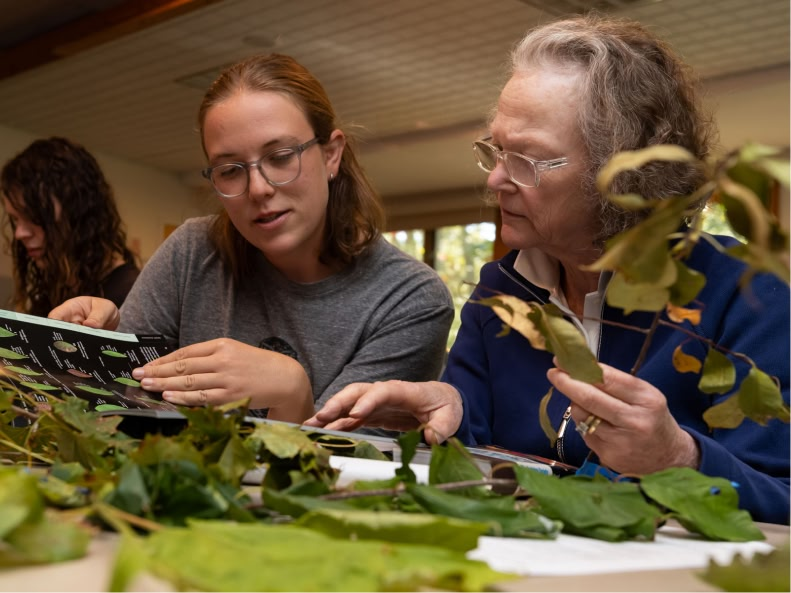
All Basic Certificate students are encouraged to begin with the foundation courses in each track, which provide native plant vocabulary, morphology, physiology, ecological context, evolution, and relationships.
Advanced Certificate: Horticulture & Design
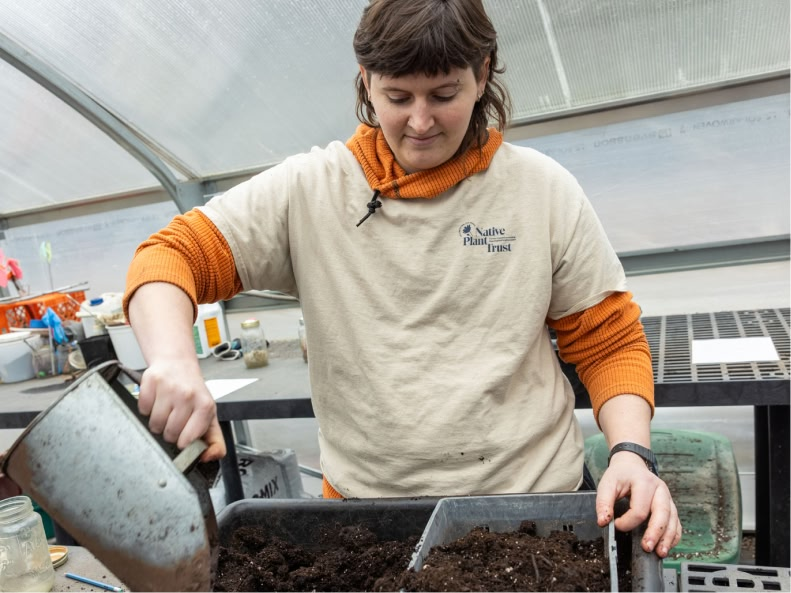
To enter an Advanced track, students must complete the Basic Certificate or have equivalent professional experience to the Basic Certificate.
Advanced Certificate: Botany & Conservation
To enter an Advanced track, students must complete the Basic Certificate or have equivalent professional experience to the Basic Certificate.
Certificate Programs FAQ
Have questions? You’re not alone.
Here are answers to the most common questions about our Native Plant Trust Certificate Programs. Please contact the Public Programs team at edu@nativeplanttrust.org with any additional questions you have.
Where can I find more information about Native Plant Trust’s certificate programs?
Visit the Certificate Programs page.
Do I have to earn the Basic Certificate before pursuing one of the advanced certificates?
It is recommended that all students begin with the Basic Certificate before moving on to the Advanced Horticulture & Design Certificate and/or Advanced Botany & Conservation Certificate. If you have experience with native New England plants, either through coursework, employment, volunteer work, or some combination of these, it is possible to begin with an advanced certificate.
If you are interested in beginning with one of the Advanced Certificates but have not completed the Basic Certificate, please reach out to the Public Programs team at edu@nativeplanttrust.org.
How do I register as a Certificate student?
To pursue a Certificate, start by registering as a Basic, Advanced Botany & Conservation, or Advanced Horticulture & Design certificate student. There is a one-time $30 registration fee per certificate.
Can I apply credits to a certificate if I had not previously registered as a certificate student?
Yes, you may apply credits for courses previously taken that have not already been applied to a certificate to new registration for a certificate program. Please contact the Education department at edu@NativePlantTrust.org to begin that process.
What courses do I need to take to earn the Basic Certificate?
The Basic Certificate is made up of seven core courses, two electives (one botany and one horticulture), a field study, a landscape study, and 15 hours of native plant community service.
We highly recommend beginning with our foundational botany sequence, which introduces students to native plant vocabulary, morphology, physiology, ecological context, evolution, and relationships. This knowledge is applied to the remaining courses. Other courses listed below do not need to be taken in a specific order.
What is the final portfolio?
The portfolio is a compilation of your best class work (field notes, garden planting plots, etc.)—whatever you think shows your skills and could support you in your future plant-related goals. Most of these products will be things that students create during class time. This is not something that is reviewed: it is just for you.
Where can I get more information about courses and electives?
Visit the Classes page.
How long do I have to earn my certificate?
Coursework up to ten years old can be applied towards a certificate; however, it is possible to earn your Basic Certificate in one year or less, and your Advanced Certificate in two years or less, if you are able to attend all the required courses at the time they are offered.
Can any of the certificates be earned completely online?
Most of our certificate courses are offered online at least one per year. Field and Landscape Studies require in-person learning in the Northeast region.
Where can I complete my native plant community service hours?
You may volunteer with Native Plant Trust or another native plant or plant conservation organization to fulfill the community service requirement. Keep a journal of the dates and times and what you worked on. Submit a brief writeup of your volunteer hours with your completed transcript template when you’re finished to edu@NativePlantTrust.org.
Native Plant Trust Plant Conservation Volunteer (PCV) hours may be used as your native plant volunteer hours. We estimate each survey takes about 6–8 hours to complete (this includes researching the plant, coordinating and preparing for the site visit, conducting the site visit, and then returning and entering data). Based on this estimate, we ask students to complete at least three surveys. Keep a journal of the dates and times and what you did each day. Submit a brief writeup of your volunteer hours with your completed transcript template when you’re finished to edu@NativePlantTrust.org.
How do I track my certificate progress?
Track your progress by filling in a transcript template as you take courses. When you have finished your coursework send your completed transcript template to edu@NativePlantTrust.org with a brief write up of how you completed your native plant volunteer hours.
If you have questions about which courses you have completed and which you have left to take, please write to us at edu@NativePlantTrust.org.