Ecological Horticulture & Native Plant Gardening
Demonstrating how and why welcoming native plants into our gardens benefits humans and wildlife alike.
What is Ecological Horticulture?
Ecological horticulture reflects a shift in gardening that values ecological function equally with aesthetics. Our region is grappling with habitat loss, fragmentation, and the rise of ecologically harmful species, resulting in biodiversity loss, all amid an unpredictable climate. This approach to gardening offers hope, agency, and a solution to these challenges, grounded in the firm belief that the intentional use of native plants in gardens and avoidance of pesticides and herbicides repair and restore our regional ecosystems.
To achieve maximum benefit for your garden and its biodiversity, ecological horticulture recommends combining thoughtful and intentional plants choices with environmentally forward garden maintenance practices: This combination includes
- Designing with native plants that benefit wildlife
- Eliminating the use of chemical pesticides and fertilizers
- Embracing ecological gardening practices
- Becoming informed about all the ways native plants benefit humans and wildlife
Garden in the Woods is an embodiment of this ethos. Dedicated to demonstrating how to garden with native plants of the Northeast using ecological horticulture techniques to manage the gardens designed and wild landscapes to the highest standard of ecological responsibility while also creating room to welcome and inspire human visitors.
At both Garden in the Woods and Nasami Farm, Native Plant Trust’s team work to provide native plant gardeners with native plants by developing propagation protocols and working with nurseries to expand the number of native species available in the retail plant trade. The organization’s Plant Finder platform as well as Director of Horticulture Uli Lorimer’s The Northeast Native Plant Primer provide needed guidance to native plant gardeners seeking to replace lawns, install native plant gardens, and restore habitats in their yards and communities.
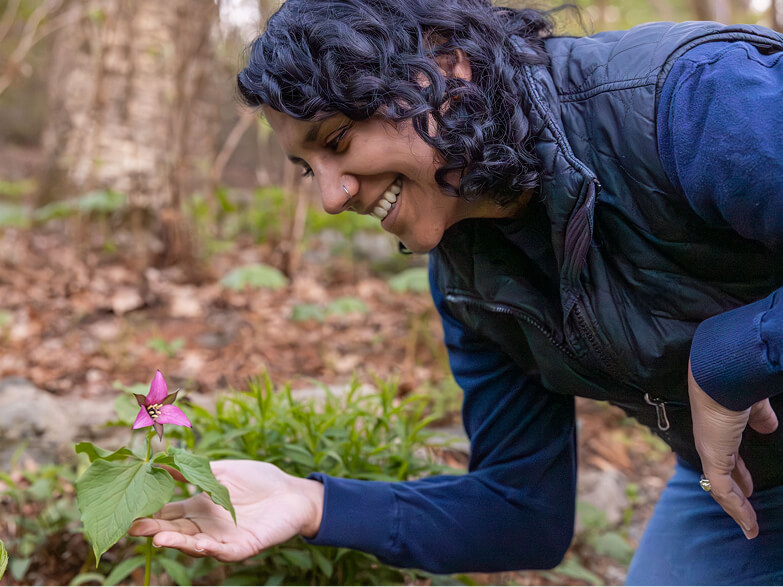
A Garden Unlike Any Other
Plant Community Driven Design
The ongoing evolution of Garden in the Woods demonstrates Native Plant Trust’s commitment to plant community-driven design. Through careful site analysis of the garden, our Horticulture team identifies and visits equivalent natural plant communities. Visiting reference sites allows us to observe, inventory, and be inspired by their unique species compositions. The resulting garden designs reflect the best of these reference communities, combined with artful skill, a sense of place, and masterful matching to the conditions at Garden in the Woods.
Garden Maintenance Practices
Thoughtful plant choices are only half the equation for maximizing your support of wildlife in your garden. How we maintain our gardens can meaningfully impact the life they sustain. Leaving the leaves all year, saving the stems in the winter, limiting lawn and when it is needed reducing mowing and building biodiversity into lawns, and creating intentional brushpiles are among the many techniques ecological gardeners can employ to keep materials on site, reduce waste, and support a thriving community of wildlife.
Plant Sourcing and Seed Banking
The region’s ecosystems are experiencing change at an unprecedented rate. Preserving local adaptation is crucial to ensuring that the flora and fauna that rely on our plants can keep pace with change. By growing native plants from local seed sources, we keep local adaptation on the landscape. The displays at Garden in the Woods reflect local adaptations as much as possible, as do our plant sales through our plant shop. To continue to strengthen the supply chain that feeds our Retail sales and displays at the garden, we collect and bank common native plant seeds through our Restoration Accelerator program.
Resources
Native Plant Trust has numerous resources to help inform and aid your journey into ecological horticulture. Plant Finder is an ecological horticulture database with detailed information on local native plants. Publications, articles, blog posts, and podcasts further provide accurate and accessible information. Sign up for our classes or newsletters.
Get Involved
Get Involved
- Register for a horticulture class
- Volunteer at Garden in the Woods or Nasami Farm
- Sign up for our free eNewsletter