Protecting Rare, Threatened & Endangered Species
Our experts work together to research, develop, and implement rare species conservation actions in collaboration with partners across the region.
Species Conservation
Some plants are naturally rare due to limited global distribution, small populations, scarce habitat, or a limited ability to spread. Some have been pushed to the edge of extinction by human activity: habitat destruction, over exploitation, and the effects of a changing climate.
No matter the reason, Native Plant Trust works with partners across the region to protect rare plants from extinction and extirpation through
- collecting and storing seeds in our seed bank,
- propagating and planting seedlings to augment or restore struggling populations,
- growing plants in our living botanical garden collection,
- assisting in the relocation of rare plants when construction threatens them,
- and closely tracking the health of threatened and endangered species.
Our rare plant monitoring program provides the quality information essential to this work, and we work together to identify, protect, and restore essential habitats.
Native Plant Trust’s role in the successful recovery of Robbins’ Cinquefoil in the White Mountains of New Hampshire is an example of the strength of this approach. This collaborative project reduced seedling mortality and added plants grown at Native Plant Trust from seeds in our Rare Plant Seed Bank, resulting in the species being removed from the Endangered Species List in 2002—the first plant ever to be de-listed.
Ex-situ conservation of plants—protecting living plants outside their naturally occurring locations—is more complex when a plant isn’t a seed that can be dried and kept in a freezer. Our expert staff at Garden in the Woods care for rare and threatened species in our botanical garden collection, where they can be studied, protected, and shared with the public.
Seed Banking
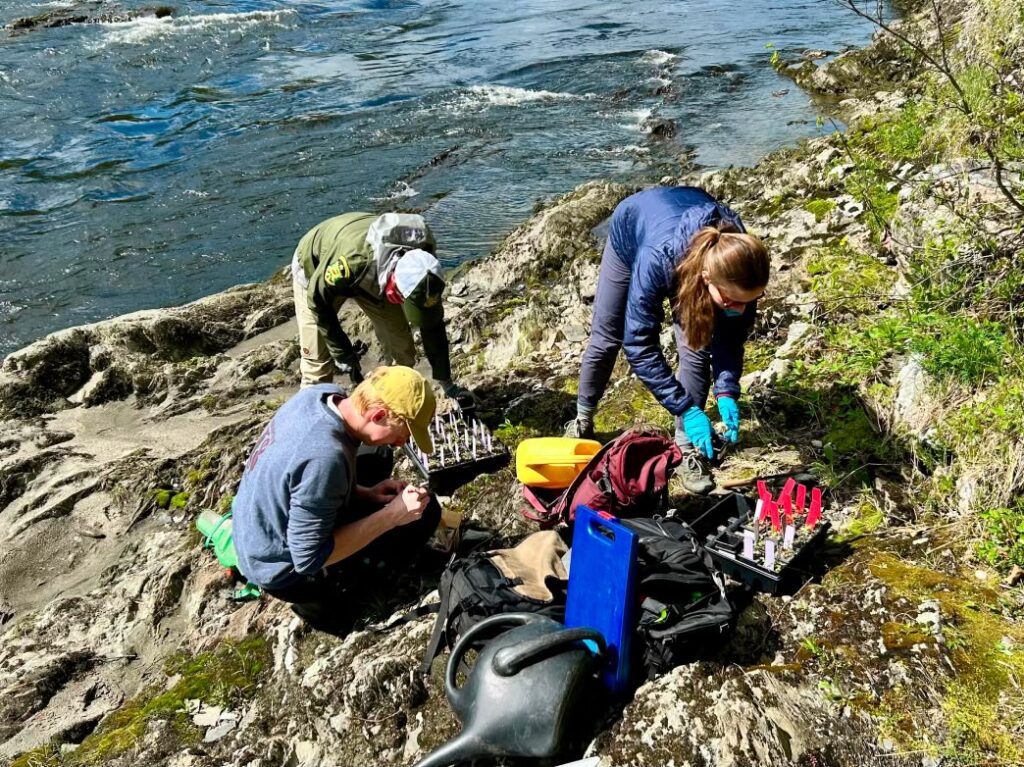
Seed banking is a powerful tool we use to support conservation, restoration and the production of native plants. Our seed bank focuses on three areas, the rare flora of New England, restoration seed via our Restoration Accelerator program and wild collected seed used to produce plants at Nasami Farm Nursery. Our collection of seeds is gathered sustainably in the wild and stored under environmentally regulated conditions to maximize longevity.
Today, 17% of New England’s native plant species are on the brink of being lost—and another 5% have already disappeared from the region. With threats to our native plants accelerating, seed banking is a critical strategy for ensuring the preservation of genetic diversity and potentially reintroducing species to the wild.
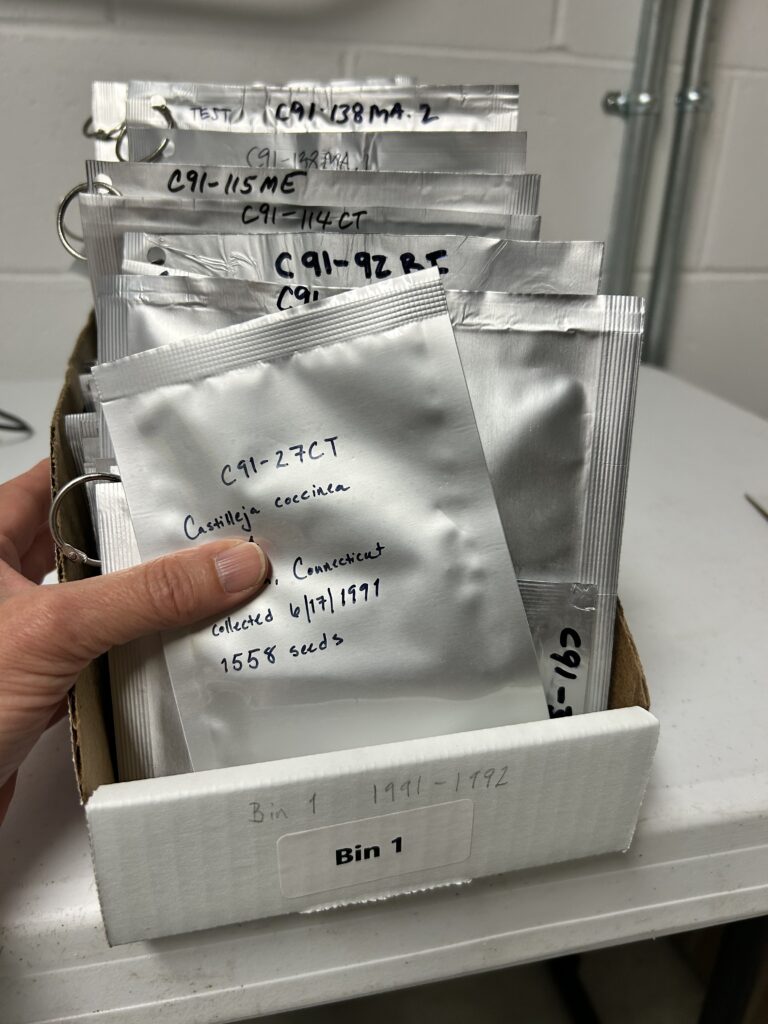
Seed banking is one of the most efficient, low-risk ways to conserve rare plants. Since 1989, Native Plant Trust has collected and stored rare plant seeds through our Rare Plant Seed Bank — one of the founding initiatives of the New England Plant Conservation Program. Seeds are gathered ethically and sustainably in the wild by our staff, Plant Conservation Volunteers, and partner organizations, then stored under environmentally regulated conditions to maximize longevity.
By 2025, the seed bank held more than 10 million seeds representing nearly 500 taxa — and it’s still growing. Our goal is to collect and preserve seed from most populations of the 389 globally and regionally rare species in New England, in line with The Global Strategy for Plant Conservation.
Read more about Native Plant Trust’s 10 million seed milestone here.
Banking seeds is not the final step. Native Plant Trust’s team of horticulture and conservation experts develop germination and propagation protocols to ensure that when called upon by Natural Heritage programs and land managers, plants can be grown from the seeds and can be used to reintroduce species into the wild.
More about Our Seed Bank
Help contribute seed
Join our Plant Conservation Volunteers to monitor rare species across the region and collect seed for the seed bank.
Contract seed storage
Under certain circumstances, organizations may contract with Native Plant Trust to process and store seeds on their behalf. To submit a request for consideration, please fill out the storage request form.
Requesting seeds for conservation or research
We consider requests for germplasm on a case-by-case basis. Professional researchers, tribal organizations, government agencies, and other institutions may be eligible to request germplasm. Individuals without an institutional affiliation may inquire if they are eligible for consideration. To submit a request for consideration, please fill out the germplasm request form.