Skip to content

Garden Shops

Your native plant garden starts here.

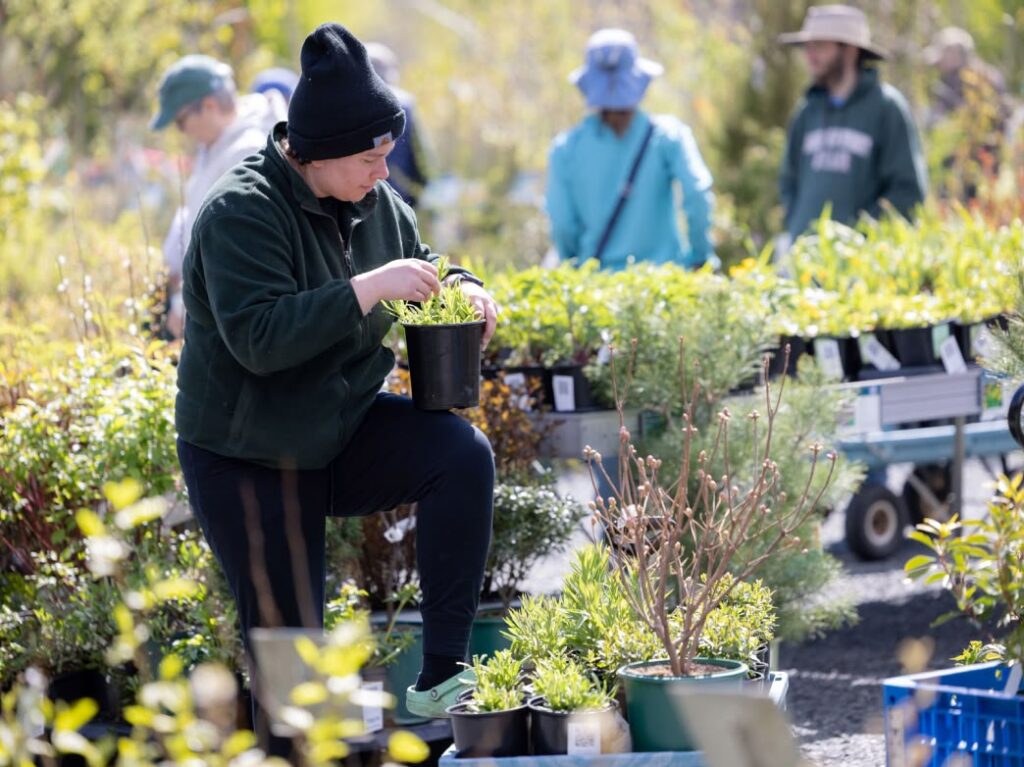
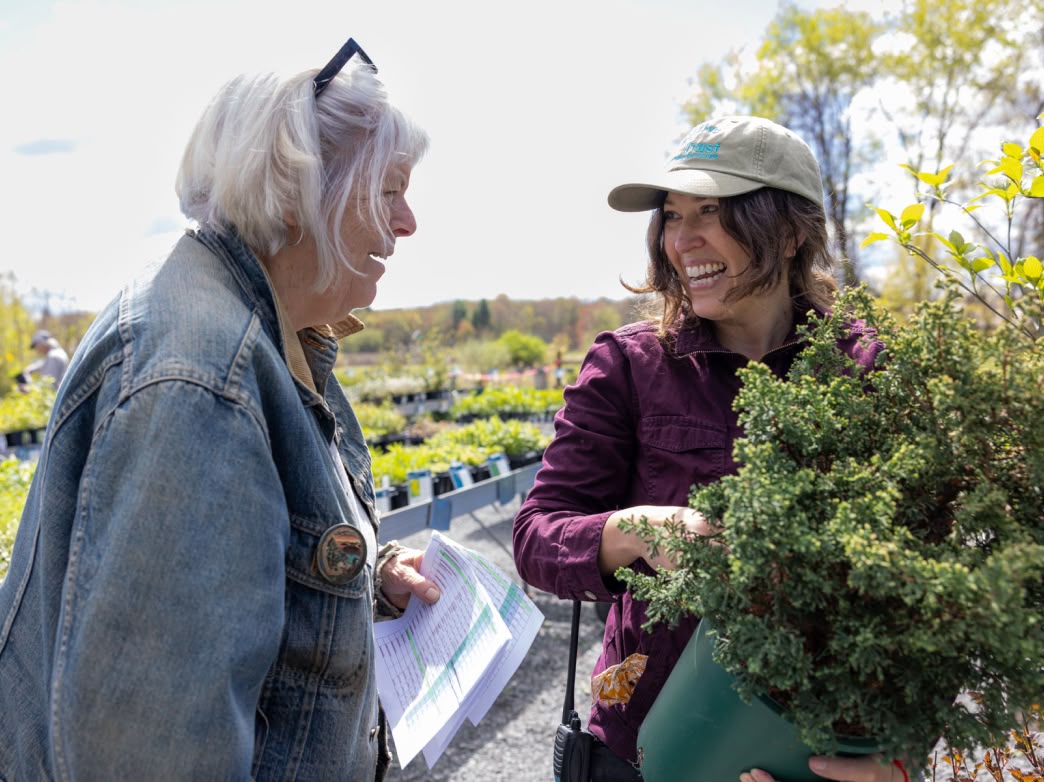
Native Plant Trust member and staff interacting at plant sale

Beautiful, resilient plants with environmental benefits

In our Garden Shops at Garden in the Woods and Nasami Farm, you’ll find an ever-increasing selection of annual and perennial herbaceous plants, including grasses and ferns, as well as shrubs, trees, and vines that are native to New England and its ecoregions. Many of our plants start from seed that is sustainably harvested from wild populations throughout our region, building in genetic diversity and resilience. The Garden Shops offer the largest selection of native wildflowers, shrubs, trees, vines and trees in New England, including many hard to find species, locally sourced seed, botanical and gardening books, tools, eco-friendly gifts and a great selection of items for children. All the plants we sell are grown without pesticides, so they will delight your eye and support the insects and other animals that depend on them.

Online Garden Shop

Visit our online shop to purchase books, seeds, and e-gift cards (delivered immediately) year-round.

Shop Now
Plan Your Garden

Plant List

Plan your garden with our plant list, updated weekly during open season.

Plant shopping at Nasami Farm
Nasami Member Preview sale © Melissa Blackall

Buy Native Plants

How to use our plant list

About Our 2026 Plant List

Plan your garden with our plant list, updated weekly during open season

All plants for sale this season are:

  • included in our plant list, available to download as a PDF or an Excel document
  • sold individually at both Garden in the Woods’ and Nasami Farm’s Garden Shops during the growing season
  • available for pre-order when the current plant list is posted (some exceptions may apply)

Tips for Using Our Plant List

  • The Excel version is sortable. For example, if you are looking only for shrubs, sort by category. If you are looking for plugs, sort by size.
  • The PDF version is printable and can be filled out like an order form.

Information in Our Plant List

Plant category: Fern, grass, shrub, sub-shrub, tree, vine, or wildflower

Pot size:

  • Each container includes a single plant.
  • Size is usually given as pot volume, such as 1- or 2-gallon.
  • “Tru Gal” is a bit larger than 1 gallon
  • “2 gal S” plants are smaller than other plants of the same species sold in the same size pot.
  • Plant height is included where known.
  • Container seedlings (“cont sdlg”) are shrub and tree seedlings/saplings in approximately 3” wide x 9” tall pots.
  • Plugs are smaller than 1 qt. seedlings grown in seed trays. You may buy plugs individually or by the tray.
  • Plant Fertility (*NEW in 2026!*): The requirements for a plant to seed or fruit. A key to fertility categories for each plant appears at the bottom of the Plant List and also can be found here.

Provenance: Seed source for species grown from seed. “Unknown” indicates that either the seed source is undetermined, or else the plants were not grown from seed. Some species are listed more than once, because in some cases we offer seed-grown and non-seed-grown plants.

Prices: Regular retail price is listed. See the Special Pricing box below for discounts available to Native Plant Trust Members, nonprofit organizations, and landscape professionals.

Availability: During the growing season, the plant list will be updated weekly, noting the current and projected availability at each location. We cannot anticipate crop delays and the pace of sales in our forecasts, so projected availability is approximate.

Plant Collections

Thirteen options to fill a special spot, feed birds and pollinators & build climate resilience

All collections contain 8 herbaceous plants (1 of each species) and will be available for pick up at Garden in the Woods or Nasami Farm. Plants are in 2-quart or 1-gallon containers unless otherwise noted.

Some collections are accompanied by woody plant companion recommendations intended to increase the collection’s ability to support wildlife and solve your garden challenges. (NOTE: Woody plant companions are not included in collection pricing. You can purchase these companions separately.)

  • Order using the information provided below.

Plant collections are sold out for the 2026 season. See below to see what was offered, and check back in early 2027 for next years’ offerings.

Keystone Natives Collection – Spring/Summer

Keystone_Natives_Collection_SprSum

Keystone plants are valued for their outsized ability to sustain many ecological relationships. The collections below and the recommended woody plant companions (sold separately; see Plant List for availability) offer a convenient way to create a wildlife haven in your garden.

Anticipated species:

Fragaria vesca (woodland strawberry)

Geranium maculatum (wild geranium )

Viola sororia (common blue violet)

Zizia aurea (golden Alexanders)

Antennaria plantaginifolia (pussy-toes)

Erigeron pulchellus (Robin’s plantain fleabane)

Thalictrum dioicum (early meadow rue)

Packera obovata (running groundsel)

Recommended woody plant companions (sold separately; see Plant List for availability):

Salix discolor (pussy willow)

Aronia melanocarpa (black chokeberry)

Amelanchier sp. (serviceberry/shadbush)

Acer rubrum (red maple)

Vaccinium/Gaylussacia (blueberry/huckleberry)

Pick-up date: on or after May 29, 2026

Keystone Natives Collection – Spring/Summer Collection price: Members $108 / Non-Members $120

Keystone Natives Collection – Summer/Fall

Keystone Plant Collection

Keystone plants are valued for their outsized ability to sustain many ecological relationships more than other plants. The collections below and the recommended woody plant companions offer a convenient way to create a wildlife haven in your garden.

Anticipated species:

Penstemon digitalis (foxglove beardtongue)

Panicum virgatum (switchgrass)

Solidago odora (licorice goldenrod)

Monarda fistulosa (wild bergamot)

Symphyotrichum cordifolium (blue wood aster)

Pycnanthemum muticum (mountain mint)

Helianthus divaricatus (woodland sunflower)

Eutrochium dubium (coastal plain Joe Pye weed)

Recommended woody plant companions (sold separately; see Plant List for availability):

Quercus sp. (oaks)

Betula sp. (birches)

Prunus serotina (black cherry)

Juniperus virginiana (eastern red cedar)

Rosa carolina (Carolina rose)

Pick-up date: on or after May 15, 2026

Keystone Natives Collection – Summer/Fall Collection price: Members $108 / Non-Members $120

Spring Ephemerals Collection – SOLD OUT

Spring_Ephemerals_Collection

Focused on the Northeast’s fabulous spring ephemerals, this collection includes species that are among the first to bloom and usually go dormant by midsummer – as the rest of the garden comes alive.

Anticipated species:

Allium tricoccum (ramps, wild leek)

Dicentra canadensis (squirrel corn)

Erythronium americanum (trout lily)

Mertensia virginica (Virginia bluebells)

Sanguinaria canadensis (blood-root)

Podophyllum peltatum (mayapple)

Trillium erectum (red trillium)

Trillium grandiflorum (white trillium)

*ONLY 12 KITS AVAILABLE FOR 2026*

Pick-up date: Apr 18-25, 2026 (Garden in the Woods), May 1-7, 2026 (Nasami Farm)

Spring Ephemerals Collection price: Members $100.80 / Non-Members $112

Curtis Woodland Spring Collection

Curtis_Woodland_Spring_Collection

This collection features selections from the iconic Curtis Woodland Garden at Garden in the Woods. With the recommended woody plant companions, you can bring some of the magic of this space into your own garden.

Anticipated species:

Stylophorum diphyllum (Celandine poppy)

Tiarella cordifolia (foam-flower)

Asarum canadense (Canada wild ginger)

Phlox stolonifera “Blue Ridge” (creeping phlox)

Phlox divaricata ”Blue Moon” (woodland phlox)

Uvularia grandiflora (bellwort)

Adiantum pedatum (maidenhair fern)

Polystichum acrostichoides (Christmas fern)

Recommended woody plant companions (sold separately; see Plant List for availability):

Rhododendron minus (Piedmont rhododendron)

Rhododendron vaseyi (pink shell azalea)

Rhododendron calendulaceum (flame azalea)

Benthamidia florida (flowering big-bracted dogwood)

Magnolia virginiana (sweet bay)

Pick-up date: on or after May 15, 2026

Curtis Woodland Spring Collection price: Members $99 / Non-Members $110

Pollinators’ Feast Collection

Pollinators_Feast_Plant_Collection

Bee, butterfly, hummingbird and songbird magnets, the plants in this collection are sure to have your garden buzzing! (Want to devote a large area to pollinator plants? Check out our Pollinator Kits for a larger selection of plug-sized plants.)

Anticipated species:

Achillea millefolium (common yarrow)

Asclepias incarnata (swamp milkweed)

Eupatorium perfoliatum (boneset thoroughwort)

Monarda fistulosa (wild bergamot)

Penstemon digitalis (foxglove beardtongue)

Pycnanthemum muticum (mountain mint)

Solidago odora (licorice goldenrod)

Symphyotrichum cordifolium (blue wood aster)

Pick-up date: on or after June 6, 2025

Pollinators’ Feast Collection price: Members $108 / Non-Members $120

Meadow Collection – For Dry and Sunny Spots

Dry_Meadow_plant_collection

The plants in this collection are drought-tolerant and grow in full sun. Once established, these low-maintenance perennials will provide color and wildlife support for your garden.

Anticipated species:

Helianthus divaricatus (woodland sunflower)

Monarda fistulosa (wild bergamot)

Sorghastrum nutans (Indian grass)

Penstemon digitalis (foxglove beardtounge)

Pycnanthemum tenuifolium (narrow-leaved mountain-mint)

Schizachyrium scoparium (little bluestem)

Solidago nemoralis (gray goldenrod)

Symphyotrichum laeve (smooth American aster)

Pick-up date: on or after June 12, 2026

Meadow Collection – For Dry and Sunny Spots price: Members $108 / Non-Members $120


Meadow Collection – Moisture-Loving Plants

Moisture-Loving_Meadow_Collection

Consistently moist or wet spots in the garden can be challenging, but these tough natives thrive in those conditions.

Anticipated species:

Eutrochium maculatum (spotted Joe Pye weed)

Eupatorium perfoliatum (boneset thoroughwort)

Vernonia noveboracensis (New Tork ironweed)

Doellingeria umbellata (flat topped white aster)

Rudbeckia laciniata (cutleaf coneflower)

Sanguisorba canadensis (Canada burnet)

Thalictrum pubescens (tall meadow-rue)

Verbena hastata (blue vervain)

Pick-up date: on or after June 12, 2026

Meadow Collection – Moisture-Loving Plants price: Members $108 / Non-Members $120

Songbird Collection

Songbird_plant_collection

Bird-friendly gardens include trees, shrubs, vines, and perennials that host insects and produce fruit, seeds, and nectar, which attracts and sustains local and migratory songbirds. This collection of perennials is intended to complement the recommended woody plant companions. Together, you will help your garden become a haven for songbirds.

Anticipated species:

Panicum virgatum (switchgrass)

Aralia racemosa (American spikenard)

Maianthemum racemosum (feathery false Solomon’s seal)

Fragaria vesca (woodland strawberry)

Rudbeckia laciniata (cutleaf coneflower)

Rubus odoratus (flowering raspberry)

Solidago rugosa (rough leaved goldenrod)

Symphyotrichum novae-angliae (New England aster)

Recommended woody plant companions (sold separately; see Plant List for availability):

Quercus sp.( oaks)

Acer sp. (maples)

Juniperus virginiana (eastern red cedar)

Ilex opaca (American holly)

Vaccinium sp. (blueberries)

Viburnum sp. (viburnums)

Sambucus nigra ssp. canadensis (black elderberry)

Lindera benzoin (spicebush)

Corylus sp. (hazelnut)

Pick-up date: on or after June 12, 2026

Songbird Collection price: Members $113.50 / Non-Members $126


Rain Garden / Bioswale Collection

Raingarden_Bioswale_plant_collection

Only tough native plants can survive being inundated and dried out! This collection of rain garden or bioswale natives helps to manage stormwater runoff while looking beautiful and supporting wildlife.

Anticipated species:

Achillea millefolium (common yarrow)

Asclepias incarnata (swamp milkweed)

Eutrochium dubium (coastal plain Joe Pye weed)

Hibiscus moscheutos (swamp rosemallow)

Panicum virgatum (switchgrass)

Pycnanthemum muticum (mountain mint)

Solidago caesia (wreath goldenrod)

Juncus effusus (soft rush)

Pick-up date: on or after June 12, 2026

Rain Garden / Bioswale Collection price: Members $112.50 / Non-Members $125

Roadside Collection

Roadside_Plant_Collection

Tired of looking at that barren, full-sun strip between the sidewalk and the road? Fill it with native plants! This collection includes some of the most drought, salt, and compaction-tolerant plants that the native flora has to offer.

Anticipated species:

Asclepias tuberosa (butterfly milkweed)

Juncus tenuis (path rush) avail as plugs

Ionactis linariifolia (stiff aster)

Pycnanthemum tenuifolium (narrow-leaved mountain-mint)

Opuntia humifusa (eastern prickly pear)

Deschampsia flexuosa (wavy hair grass)

Eragrostis spectabilis (purple love grass)

Solidago sempervirens (seaside goldenrod)

Recommended woody plant companions (sold separately; see Plant List for availability):

Comptonia peregrina (sweetfern)

Arctostaphylos uva-ursi (bearberry)

Vaccinium angustifolium (low bush blueberry)

Prunus pumila var depressa (sand cherry)

Pick-up date: on or after June 12, 2026

Roadside Collection price: Members $108 / Non-Members $120


Woodland Moss Garden Collection

Woodland_moss_garden_plant-collection

Mossy patches in your garden are a delight and an opportunity to display delicate and diminutive plants that might otherwise be swamped or lost in leaf litter or by competition from larger plants. This collection highlights these wee treasures, ideal for planting into moss or consistently open ground.

Anticipated species:

Houstonia caerulea (bluets)

Mitchella repens (partridgeberry)

Gaultheria procumbens (wintergreen)

Epigaea repens (trailing arbutus)

Anemone acutiloba (sharp leaved hepatica)

Adiantum pedatum (maidenhair fern)

Micranthes virginiensis (early saxifrage)

Sedum ternatum (woodland stonecrop)

ONLY 15 KITS AVAILABLE FOR 2026

Pick-up date: on or after June 12, 2026

Woodland Moss Garden Collection price: Members $94.50 / Non-Members $105


Shade Bloom Collection

Shade_Bloom_Plant_Collection

Are you looking for plants that do well in shade or at woodland edges for color throughout the growing season? Here is a collection for you!

Anticipated species:

Geranium maculatum (wild geranium )

Fragaria vesca (woodland strawberry)

Aralia racemosa (American spikenard)

Symphyotrichum cordifolium (blue wood aster)

Eurybia divaricata (white woodland aster)

Solidago caesia (blue-stem goldenrod)

Solidago flexicaulis (zig zag goldenrod)

Ageratina altissima (white snakeroot)

Pick-up date: on or after May 22, 2026

Shade Bloom Collection price: Members $112.50 / Non-Members $125


Woodland Groundcover Collection

Woodland_Groundcover_Plant_Collection

Often what’s underneath is as important as the standout. Whether a true groundcover or an important fill-in shrub, this collection is sure to add woodland interest.

Anticipated species:

Carex pensylvanica (Pennsylvania sedge)

Polystichum acrostichoides (Christmas fern)

Tiarella cordifolia (foam-flower)

Heuchera americana (coralbells)

Podophyllum peltatum (mayapple)

Asarum canadense (Canada wild ginger)

Eurybia macrophylla (big leaf aster)

Adiantum pedatum (maidenhair fern)

Pick-up date: on or after June 12, 2026

Woodland Groundcover Collection price: Members $108 / Non-Members $120
Plug Trays and Pollinator Kits

Plug trays and pollinator kits are sold out for the 2026 season. See below to see what was offered, and check back in early 2027 for next years’ offerings.

NEW in 2026 – Expanded Plug Selection

Our Garden Shop has greatly expanded the number of species available for purchase as plugs. We now offer plugs for more than 65 species of native grasses, wildflowers, and shrubs. Download this list of species available as plugs. You can also view the full selection by sorting the plant list by size. Plugs may be purchased individually OR as full plug trays (generally 50/tray).

NEW in 2026 – Local Ecotype Half-tray Plug Kits

Create a beautiful wildflower garden with our new local ecotype half-tray plug kits ($100).  Available starting in mid-May, each half-tray contains 5 plugs of each of 5 species (25 plugs total).

  • Sun-loving Pollinator Kit
    Monarda fistulosaSolidago caesiaSymphyotrichum laevisPycnanthemum muticumAchillea millefolium
  • Shady Spot Pollinator Kit
    Mimulus ringensEurybia macrophyllaSolidago flexicaulis, Thalictrum pubescensTiarella cordifolia
  • Moisture-loving Meadow Kit
    Doellingeria umbellataVerbena hastataIris versicolorLobelia cardinalisEutrochium maculatum, Ageratina altissima
  • Dry Meadow Kit
    Helenium autumnaleSolidago sempervirens, Pycnanthemum virginianum, Anaphalis margaritacea, Penstemon hirsutis
  • Full Season of Bloom Kit
    Aquilegia canadensisPenstemon digitalisEragrostis spectabilisHelenium autumnaleSymphyotrichum novi-belgii, Euthamia graminifolia

Nasami Farm Nursery Pollinator Kits

Native pollinators need native plants for habitat, and native plants need native pollinators to reproduce. The populations of bees, butterflies, bats, and birds that pollinate all plants are threatened, and the native-plant habitats they depend on are vanishing. But you can help! With our carefully selected mixes of native pollinator plants, you can transform your home landscape into a native plant pollinator oasis that buzzes with life!

  • Native Plant Trust offers pollinator kits for pre-order that are tailored to three types of growing conditions:
    • Kit 1: Full sun, average to dry soil; well suited to open sites with drier conditions.
    • Kit 2: Part sun, moist to dry soil; adaptable to a wide range of conditions including woodlands.
    • Kit 3: Full to part sun, moist to occasionally wet soil; ideal for pond shores and other damp sites.
  • This downloadable table provides details about the plants included in each kit. Each plant species designated as a HOST supports five or more native butterfly or moth species during their larval stage. (Kit contents may vary slightly from what appears in the table, based on last-minute variables.)
  • Each kit is packaged in a single tray, containing 50 plug-sized plants (7 species) selected to produce a cascade of bloom throughout the season and habitat for particular pollinators at all stages of their life cycles. Beginning in 5-inch-deep plug cells, these plants should mature to fill a space approximately 75 square feet or larger, depending on what is growing there already and the desired planting density.
  • All plants in our kits are started from seed native to our region to ensure high genetic diversity.
  • Our plug kits deliver faster results than gardens started from seed, because you start with well-developed plants with deep, healthy root systems that establish quickly.
  • We use biological controls rather than chemicals as our first line of defense against pests. We use no systemic pesticides, such as neonicotinoids.
  • After you place an order, we will send you instructions on how to prepare the soil so that it will be ready for planting when you receive your kits. For best results, please follow our instructions on how to prepare your site and care for the plants as they become established.

Pollinator Kit Pricing and Ordering

  • Pricing: $200/each. Native Plant Trust members save 10%.
  • Quantities are limited and kits often sell out — pre-order yours now!
  • Pick-up starts in mid-June.
  • Order using the information provided below.

Resources for Gardeners

Turn your yard into an oasis for all forms of life

Garden Plant Finder

Discover plants native to New England that will thrive in your garden and meet your needs.
Garden Plant Finder

Ecological Gardening

Check out tips on how to work with nature to achieve a beautiful and sustainable garden.
What is ecological gardening?
Ecological gardening resources

Two Ways to Shop for Native Plants

Visit Garden in the Woods or Nasami Farm to shop in person or pre-order plants for pickup

How to Pre-order Plants

Start by choosing your plants. Use our plant list to pick types, sizes, and quantities for your project — if you’d like help deciding, just reach out to our plant sales team at Garden in the Woods or Nasami Farm.

Then email your order to gardennatives@NativePlantTrust.org for Garden in the Woods pickup, or nasaminatives@NativePlantTrust.org for Nasami Farm pickup. Include your name, email, and phone number. Members should add their membership number to apply their discount — let us know if you’d like to join or renew, and we’ll build that into your quote. 

Our plant sales staff will send a quote within a few days (a little longer during busy seasons — thanks for your patience). A 100% deposit is required to reserve your plants, with payment instructions included in the quote. Once your plants are ready, we’ll email you to schedule pickup; please review our Plant Pickup Expectations below.

Note that nonprofits and landscape professionals should register with us first for discounts, tax exemption, or purchase-order authorization — we need documentation on file before these benefits can apply. List each plant with its species name, pot size, and provenance so we send the right items. 

Refunds & Returns

We work hard to provide high-quality plants in excellent condition to every customer. However, if your project plans change or you are dissatisfied with a plant you have received, please contact the location where you purchased plants to arrange an exchange or refund.

If we cannot provide a plant you pre-ordered, you will receive a refund.

Plant Pickup

We do everything we can to keep your plants healthy and ready for you — but plants are happiest in the ground, so we can’t guarantee their condition if pickup is delayed too long after they’re reserved.

  • We schedule a single pickup when possible depending on plant availability. If plants become available at different points in the season, we’ll let you know as each group is ready.
  • Once we notify you, please reply within 3 days to schedule pickup within 7 days of that notice. Need more time? Just reach out to our plant sales team to arrange an extension.
  • If we don’t hear from you within 10 days of your pickup notice, we may return your plants to inventory and can no longer guarantee availability.

Shop Online

Visit our online shop to purchase books, seeds, and e-gift cards (delivered immediately) year-round.

Books

Browse our selection of books on native plant horticulture, garden design, and ecology written by Native Plant Trust staff who are leading authors in these fields.

You can buy these books elsewhere… but when you buy them from us, you help to fund our mission. And don’t forget that, like plants, garden tools, gifts and classes, our books are available to members at a discount.

Shop books

Seeds

Native seeds for your garden from the Northeast Seed Collective!

Shop seeds

Gift cards

We now offer e-gift cards (delivered immediately) in our online Garden Shop. Or call us at 774-301-8465 with recipient and payment information. We’ll mail the gift card to you or the recipient. Gift cards may be redeemed for merchandise and plants at Garden in the Woods and Nasami Farm.

Garden Consulting

Are you looking to plant a native garden but don’t know where to start? Do you need help deciding what to plant and where? Or how to maintain your garden in an environmentally sound way? Native Plant Trust’s Garden Consulting Program can help!

Transform your yard into a beautiful, sustainable landscape and a habitat for insects, birds, and other wildlife. Guidelines for the Native Plant Trust Garden Consulting Program have been developed in coordination with our Horticulture staff so you can be confident that your project is based on the principles of ecological gardening. Our consultant will help you work along with nature, choose the right native plants for your conditions, and show you how to maintain your garden without chemicals.

Are you looking to plant a native garden but don’t know where to start? Do you need help deciding what to plant and where? Or how to maintain your garden in an environmentally sound way? Native Plant Trust’s Garden Consulting Program can help!

Transform your yard into a beautiful, sustainable landscape and a habitat for insects, birds, and other wildlife. Guidelines for the Native Plant Trust Garden Consulting Program have been developed in coordination with our Horticulture staff so you can be confident that your project is based on the principles of ecological gardening. Our consultant will help you work along with nature, choose the right native plants for your conditions, and show you how to maintain your garden without chemicals.

FAQs

From choosing plants to buying gift cards, we have answers.

Where can I get some advice about which plants will work best in my yard?

We have some great tools for you! Our Garden Plant Finder is a helpful tool you can use to develop lists of plants that will thrive in your garden’s conditions. This year’s plant lists contain a Garden Plant Finder link to each species. For color-illustrated handbooks with full plant descriptions, we recommend our books, The Northeast Native Plant Primer: 235 Plants for an Earth-Friendly Garden or Native Plants for New England Gardens. You can buy them online on the Books by Our Experts page. Once we open for the season, we look forward to helping you in person. Until then, we can help you with pre-orders and answer questions by email and phone. Since we are working remotely much of this time, it is best to email gardennatives@NativePlantTrust.org with questions. If you would like us to phone you, please let us know the best times to reach you.

How do I purchase a gift card?

We now offer e-gift cards (delivered immediately) in our online Garden Shop. Or call us at 774-301-8465 with recipient and payment information. We’ll mail the gift card to you or the recipient. Gift cards may be redeemed for merchandise and plants at Garden in the Woods and Nasami Farm.

How do I select plants for a specific purpose?

Access our tip sheets for plants with helpful attributes for native plant gardening.

I want my fruiting plant to bear fruit. Do I need two plants (male & female) for fruiting?

To fruit, some plants (monoecious) can pollinate themselves. Others (dioecious) need a male and female of the same species nearby and a pollinator to move the pollen from one plant to the second. Without pollination, flowers may bloom but won’t produce fruit. Self-pollinating plants have male and female parts and can pollinate themselves, so they don’t need a separate male plant. Two genetically distinct plants are recommended for cross-pollination. You can find the fertility code for each plant at the bottom of our Plant List. Download the fertility code key here.

What can I do about aphids, fungus and other pests?

Insects—both beneficial ones and harmful ones—evolved to interact with plants. But don’t immediately reach for an insecticide! First, observe and learn more about who has a relationship with your plant. Then decide whether the damage to your plant can be accepted and where your threshold lies before you take action. Once you reach your threshold of tolerance, start with physical means (i.e., pick them off, remove infected leaves, etc.), then escalate to nontoxic plant-based sprays before turning to harsher chemicals , as a last resort. Gardening with natives includes allowing your plants to be food for others!

Why don’t you sell rare, threatened, and endangered plants?

There are many reasons why a plant may be of conservation concern in the wild, from growing at the edge of its range, needing very specific habitats that are becoming ever more scarce, to growing nowhere else in the world (endemism). But the answer to securing rare plants in the wild is not as easy as simply growing more of them. Plant conservationists are careful about what gets introduced back into natural spaces, ultimately because they do not want to cause harm to the plants that remain. For this reason, we do not sell rare, threatened, or endangered plants, because unintentional harm to a nearby population may result from a backyard planting. We also do not wish to support the illegal harvest of seed or plants from the wild to satisfy a collector or rare plant enthusiast. Native Plant Trust choses to abide by a high standard of ethics when sourcing its plants and feel morally obligated to provide positive benefits to the environment through the use of native plants, rather than causing harm. For this reason, we do not sell rare, threatened, or endangered plants, sourced from local wild populations, because unintentional harm to a nearby population may result from a backyard planting.


What is Native Plant Trust doing—and what can I do—to prevent the spread of jumping worms?

Jumping worms (a.k.a. snake worms, crazy worms) are now widespread and spreading aggressively throughout the Northeast. These invasive earthworms are noticeably larger than the established earthworms and thrash violently when disturbed. Their presence is also marked by piles of grapenut-sized castings (feces). Damage caused by jumping worms includes devouring leaf litter that regenerates soil and over-aerating the soil, causing nutrients to leach out, roots to loosen, and soil to erode.

What Native Plant Trust is doing to prevent the spread of jumping worms:

● All wood chips and compost used at Garden in the Woods are produced on site.

● We use new plastic pots for most of the plants we sell. We clean and sanitize any reused pots.

● Nasami Farm nursery staff place all seedlings of raised benches or pallets inside the greenhouses.

● At both locations, our potting mix comes bagged, and we do not store it on the ground.

● We check plant deliveries from our wholesale growing partners on arrival, and staff regularly monitor the plant-sales area for signs of jumping worms. Our wholesale collaborators are taking similar measures.

● We display plants on raised platforms when possible.

● Throughout the season, plant-sales staff remove plants from pots to check soil and roots, and they inspect all pre-orders before customers pick up their plants.

What you can do:

● Learn to identify jumping worms (resources below) and look for signs in your yard and garden (large castings, disappearing leaf litter, and loosely rooted plants). The best time to look for adult worms is late summer through early fall. The resource links below provide more information.

● Do a “mustard pour” to see if you have worms: Mix 1/3 cup dry mustard seed powder with 1 gallon of water and slowly pour into your soil. This agitates any worms present and forces them to the surface.

● If you find jumping worms, place them in a sealed plastic bag in the sun for 10 minutes, then dispose of the bag in the trash.

● Check the roots and soil of purchased plants before you plant. To be sure you are not bringing cocoons (dark, poppy-seed sized) into your garden, use a bucket of water to clean soil from plant roots and then dispose of that soil waste in a plastic bag.

● Clean your shoes before and after walking in the woods, parks, and public gardens.

See these university extension websites or more information:

UMass Extension

Cornell Cooperative Extension

Entomology Research Laboratory at University of Vermont

UConn Agricultural Experiment Station

Do you have pot recycling?

When our Garden Shops are open, you may recycle plastic pots from plants purchased at Garden in the Woods and Nasami Farm, thanks to our recycling partnership with Van Berkum Nursery in Deerfield, NH. Please return your pots to the Garden Shops at either location during their open hours.